When Intelligence Becomes Rentable
As AI makes thinking effortless, what happens to judgment, taste, and human creativity? A reflective essay on resisting cognitive outsourcing in the age of LLMs.
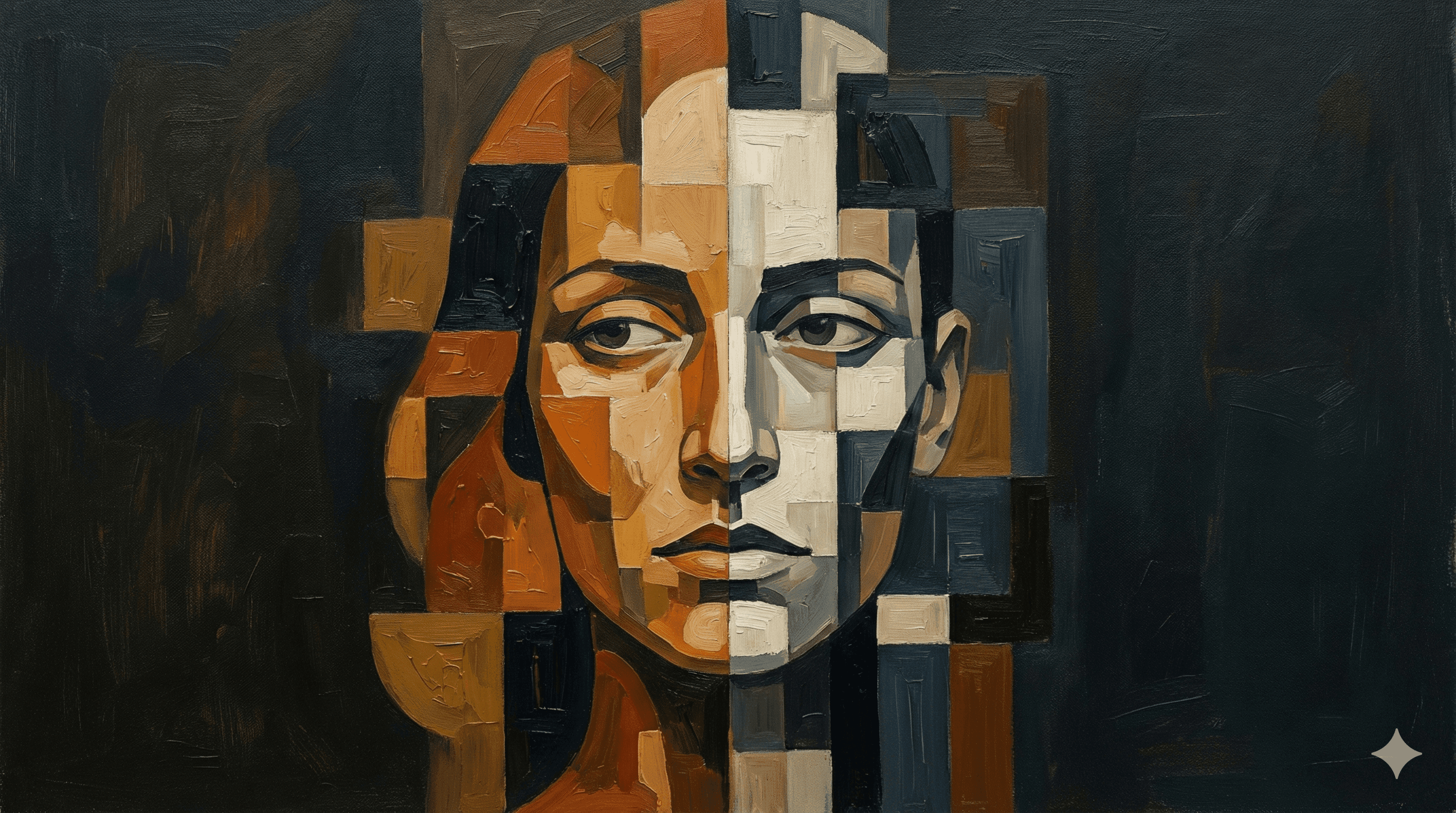
I leaned back in my chair waiting for an LLM model to write a piece of code on the project that I was working on. I only had to verify and approve it. While it was processing, my thoughts took me back to my college days. I was a mechanical engineering student, and do not get me wrong, I loved it (well, parts of it). I shared my hostel room with 5 other people. In my second month of college, I came across something called Arduino. Arduino is open-source electronics platform that allows you to build things using code and hardware. I ordered the kit for myself an invited all my roommates to figure out how it works. All of us were clueless. After our multiple futile attempts, we were still struggling to even make a simple thing work on it. Our objective was just to be able to control the LED light on the Arduino using the code that were were writing. Looking back it was the easiest thing to do, but in the moment it took us several more efforts of googling and reading through the documentation to even see ray of hope, but at last we were able to control the LED bulb using our code and as soon as that happened we jumped around elated with joy. The sheer experience of writing a piece of code and being able to control a piece of hardware was mind altering for all of us. After that we went on to play around with it and build projects with our newly found interest. Being able to write the code and make it do something was not just a playful experience but also unlocking a new way of thinking for me. I fell in love with it. Even though I was a mechanical engineering student, I started writing code.
The model had finished writing the code, I went through the implementation verified everything and added that code in my project. The act of solving a problem using a programming language was the most fun part of any project that is slowly drifting away from the developers. This gives me a strange discomfort because I sense that this is not just limited to writing code. You have a work problem and do not know how to deal with it? Instead of talking to a friend or a co-worker and processing your own thoughts with them - you write it down to ChatGPT and you know the answer. You want to buy a new smartphone but do not know which one is suitable for you? Why bother going through multiple blogs/videos and thinking which one would be right for you, just write down your budget and requirements to chatGPT and wait for it to give you a list according to your preference. Have an emotional problem? Just write it down to chatGPT and it will tell you exact things that will make you feel right. LLMs are coming for our judgement and cognition.
It is easy to say that LLMs are like calculators, just as calculators freed us from arithmetic, writing freed us from memorization, Google freed us form recall, LLMs do not replace thinking—they free us from low-level cognition, or it is easy to discard LLMs as a superior version of Google Search: why search the internet when you can ask LLMs which are itself trained on the internet's data?
However, I like to defer that LLMs are more than that. While language is not necessary for intelligence, language unlock certain level of intelligence. Just by having ability to produce coherent patterns of words which can form meaningful sentences LLMs have unlocked a certain level of intelligence even though currently it might not be at par with humans and it cannot be discarded as a better information retrieval machine compared to a google search.
Internet is fundamentally different from language models; the internet acts as a shared memory for all of human society. It has become a primary form of external or transactive memory, where information is stored collectively outside ourselves. We do not necessarily remember everything that we read or find useful, but we naturally tend to remember how to find that information again if needed. A 2011 study showed that when humans gather information from the internet, they do not necessarily remember the information itself but rather where they found it—much like remembering the address of a bank instead of how the bank looked.1 Humans use transactive memory all the time; that is how teams operate. Not everyone can be a specialist at everything, so when working in teams we divide responsibilities and share memory and cognition to operate better.
But LLMs are simply not a glorified version of google search. Language allows us to form reasoning—if -> then -> therefore. It allows us to compress complex ideas into symbols— gravity, justice or APIs. Without language, intelligence stays local and ephemeral. Discarding LLMs as information retrieval machines would be naive. LLMs are capable of understanding your point of view, putting words to how you feel, reason through your arguments and then come up with coherent answers. This may not be real thinking but it is sufficient to replace some of ours.
Asking LLMs for help with emotional problems, asking them to choose products for us, asking them to analyze an economic event, or making them search the internet to find the best coffee machine within a budget are just minor examples. LLMs are not only helping us—they are shaping the human mind.
Changing one's perception of the world and the way you think is not necessarily a wrong thing. After all we are all shaped by internet: the content we consume, the trends we follow, the creators we watch. But the difference is that on the other side of the internet, there was still a human sharing their work with others. Being shaped by LLMs means being shaped by machines.
This makes me wonder—Language forms the basis of culture and shapes society, and in the world where LLMs are coming for our cognition and intelligence, and not only can it speak but also create art, what happens to the humanness of anything, what happens to the art we create? What happens to time that we seek from our friends to share our emotions? What happens to the appreciation of someone's hard work lasting decades to produce something. What happens to the human ingenuity? I do not have answers to many of these questions but I do have an innate feeling of protecting the human in me, protecting the human expression, protecting my human identity, protecting the art.
When intelligence is accessible to humans at a click of a button, the value of intelligence goes down. Just like we tap into transactive memory of the internet and rely more on where to find the information than storing the information in our memory, we would tap into rentable intelligence of AI models and would form neural connections on how to prompt them better than actual intelligence. LLMs flatten judgement, judgement shapes the taste, and taste underpins art, identity and authenticity. If the thinking for us is done by machines we would be simply rendered out as space travelers on the Axiom space ship from the movie Wall-E where we are intellectually handicapped and tied to a wheelchair of thinking machines.
Just like using Google to search for things is second nature to me, asking and talking to a machine would be for the upcoming generation. The internet generation faced the problem of information overload, causing ourselves to compare with the whole world, getting to know many different world views even before developing my own but still leaving the scope of finding my own voice and identity. But what about the future generation— what if their only world view is that of an LLM? What if instead of finding their own voice and own way of doing things they just blindly accept the suggestions of an LLM? Is this the death of thinking? Is this the death of taste? Is this the death of a unique perspective? Have we trained LLMs on human data and created an average taste entity? Is using an LLM unknowingly training to be average of all of us. This anxiety that something essential is lost when experience becomes too easy and too reproducible is not new. We have encountered it before, not in thinking or identity, but in art.
Walter Benjamin, in his 1936 essay, argues that mechanical reproduction of art is causing it to lose its aura. He defines aura as the unique presence of a work of art in time and space—its singular, unrepeatable “being there,” grounded in authenticity, history, and tradition. At the time of writing, the ability to reproduce works of art had been greatly simplified through technologies such as photography and the printing press. Benjamin argues that art was losing its aura because it could now be easily reproduced and widely distributed. He describes this as the death of art, since the uniqueness and authenticity that once defined it were being destroyed. If mechanical reproduction (photography, printing, etc.) marked the death of art, then generative AI could be understood as the death of the artist.2
Alright! Is it over then? We definitely cannot go back to pre-LLMs era, should we just accept our fate? I like to defer and be hopeful that humans will not lose their own humanity. But it is going to take a tremendous amount of effort to do so. Now, I am not a cognitive scientist and there are currently no long term studies on how LLMs affect our brains. So I will have to rely on my own intuition to protect my cognition and perhaps some of this can help you too. So I keep on wondering what should I do?
In a world where consumption is at its peak I find creation to be the only balancing act. In a world where everything and anything can be written by LLMs, I find writing to be the best weapon to protect and sharpen thinking. To write is to think, to think is to be human.
I often feel that if I use LLMs for everything I will lose my opinions and perspective of the world and would adopt a rather average viewpoint. While at a certain age all of us form certain rigid opinions; in the era of LLMs we need to be more deliberate about it. Opinion forms taste, taste is the basis of authenticity and authenticity makes things human. I have to deliberately choose to ask myself what do I think about this particular thing or an event, what is my opinion of it, what do I think of this emotion, if I do not have opinions of my own other peoples opinion will shape it, and if I spend talking to LLMs for a significant amount of time I will develop most ordinary opinion of the world. I will become a Gaussian-distributed puppet. Knowing what I think about something rather than adopting the external opinions seems like an deliberate attempt to protect my conscience against AI.
While AI optimizes for ease, I must reintroduce difficulty. I should go on and read that long article instead of asking the summary to a LLM. I should focus thinking without an autocomplete, read without summaries, create without help, and treat friction as cognitive resistance training. Instead of talking to a model I should seek more human connections, I should sit with confusion alone, sit with confusion with others, and let meaning emerge socially not computationally. Protecting the taste is the last human moat, and taste cannot be downloaded; it must be lived, I must live through experiences, I must live through mistakes, I must live through human deviations where AI is trying to average it out.
While AI might be the greatest and the last technology mankind ever invents, I would like to believe there is something special about humans that machine would never replicate. Maybe the mother's immediate understanding of what the baby wants just by his cry...; maybe the feeling that the vibe of the city is different compared to where you came from, or maybe the joy of seeing loved ones, maybe the feeling of meeting the old friend, maybe the altruistic nature of doctors volunteering to work in small villages, maybe the firemen jumping in the fire to save a puppy, maybe losing the self while creating art, maybe the able to imagine worlds which never existed, maybe telling stories with emotions and maybe listening to a person and understanding a lot of them that they have not said yet. Even at the risk of being egoistic I would like to believe and to hope these things are never replicable by machines. While you cannot predict the future and you can only bet even at the risk of losing it I would like to bet that humans will be relevant and get closer to humanity.
For now I will accept the code changes suggested by an LLM model but along with that, I will remind myself to be human, more than ever now.
Footnotes
-
Betsy Sparrow, Jenny Liu, and Daniel M. Wegner,
Google Effects on Memory: Cognitive Consequences of Having Information at Our Fingertips,
Science 333, no. 6043 (2011): 776–778.
https://doi.org/10.1126/science.1207745 ↩ -
Walter Benjamin, The Work of Art in the Age of Mechanical Reproduction (1936),
translated by Harry Zohn.
https://www.marxists.org/reference/subject/philosophy/works/ge/benjamin.htm ↩
Keep going
We Need to Write More
Why is our thinking clearer when we write about something than when we just think about it? A short tour through working memory, the motor cortex, and the bottleneck that makes writing magic.
The Critique, The Creator and the Editor Went to a Bar
The three voices you need to make anything — and why letting them work at the same time means nothing gets made. On sequencing creation, critique, and editing instead of letting them clash.
Daal Chawal Happiness
All happiness is small. On cooking my mom's daal chawal, the fleeting nature of every joy — from new sneakers to dream cars — and why the mind keeps fooling us into ranking them.